



The Ghana Statistical Service (GSS) has cautioned that relying solely on Gross Domestic Product (GDP) to assess national development could leave policymakers blind to environmental degradation, inequality and other challenges affecting long-term prosperity.
Speaking at a policy workshop on “Measuring What Matters in Ghana: Inclusive and Sustainable Growth Beyond GDP” in Accra, Acting Deputy Government Statistician Francis Bright Mensah said economic growth figures do not always reflect the true state of a country’s development.
According to him, while GDP remains a vital tool for measuring economic activity, it cannot fully account for factors such as environmental sustainability, social inclusion and citizens’ well-being.
“A rising GDP may signal economic growth. But if that growth comes with deforestation, land degradation, water pollution, biodiversity loss, or widening inequality, then our picture of progress is incomplete, and a partial picture leads to partial decisions,” he said.
Mr Mensah warned that countries risk making poor policy choices if they focus exclusively on economic output without considering the condition of natural resources and the distribution of the benefits of growth.
“We can grow richer on paper while becoming poorer in the things that matter most,” he stated.
He noted that Ghana’s economy depends heavily on natural assets, including forests, minerals, agricultural land, water resources and biodiversity, making sustainable management of those resources critical to future development.
“Our long-term prosperity depends not only on the value of what we produce today, but also on how responsibly we manage and preserve these assets for future generations,” he said.
Mr Mensah described the growing international movement toward measuring development beyond GDP as both timely and necessary for Ghana.
He explained that the “Beyond GDP” agenda seeks to complement rather than replace traditional economic indicators by incorporating measures of environmental health, social progress, resilience and quality of life.
“Rather, it is about complementing it by enriching our understanding of national progress with measures that capture the full wealth of our nation, our people, our natural resources, our institutions, and our communities,” he said.
The Acting Deputy Government Statistician said adopting broader measures of development would help answer critical questions about whether natural resources are being used sustainably, whether economic growth is benefiting all groups in society and whether future generations will inherit adequate opportunities and assets.
“These are not abstract questions. They are fundamental questions of responsible governance and sustainable development,” he noted.
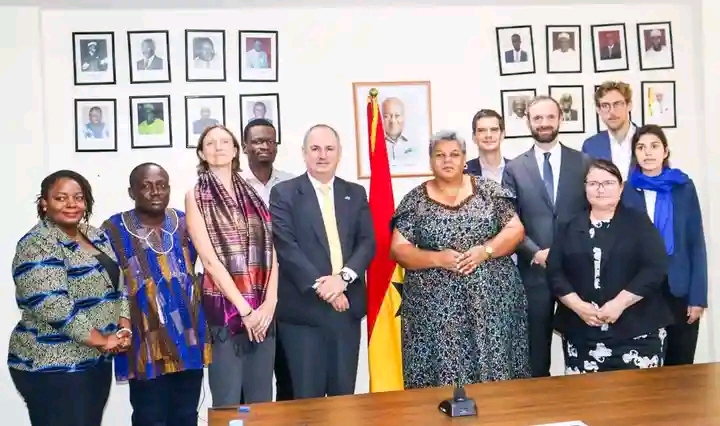
The workshop brought together policymakers, researchers, development partners, academics, civil society organisations and private sector representatives to discuss how Ghana can develop a national framework for measuring inclusive and sustainable growth beyond conventional economic indicators.
Mr Mensah said the ultimate goal is to ensure that national development policies are guided not only by economic performance but also by the well-being of citizens and the sustainability of the country’s natural resources.
Source: MetroTV